USER REFERENCE
If you have a Google account, you can access the CN Remote helper on Notebook LM. Ask it questions and get detailed information about the application.
CN Remote on Notebook LMSave screen real estate without losing control.
Right click the panel and select Make Collapsible. The entire panel shrinks down to a single, unobtrusive control button.
Simply mouse over the control button to instantly reveal your full panel. Move your mouse away, and it vanishes again.
* Customize the size, color, and font of the collapse button in the Panel Settings.
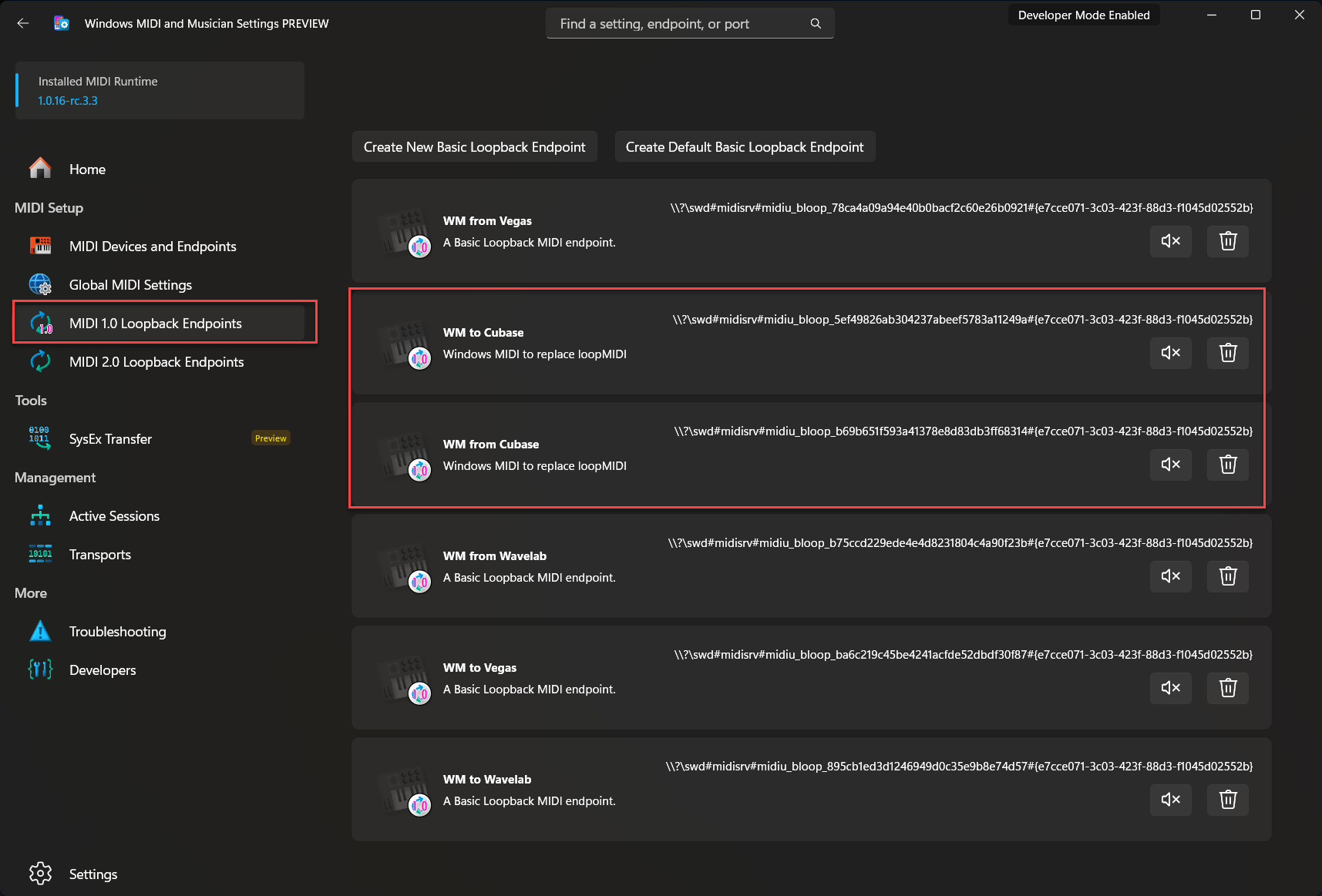
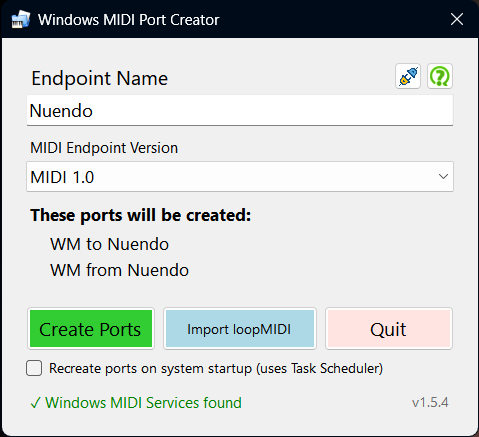
Open Windows MIDI and Musician Settings (or download loopMIDI) and create two virtual ports. These ports act as the cables between the panel and your DAW.
You can use the Windows MIDI Port Creator to help you make your MIDI ports or import loopMIDI ports.
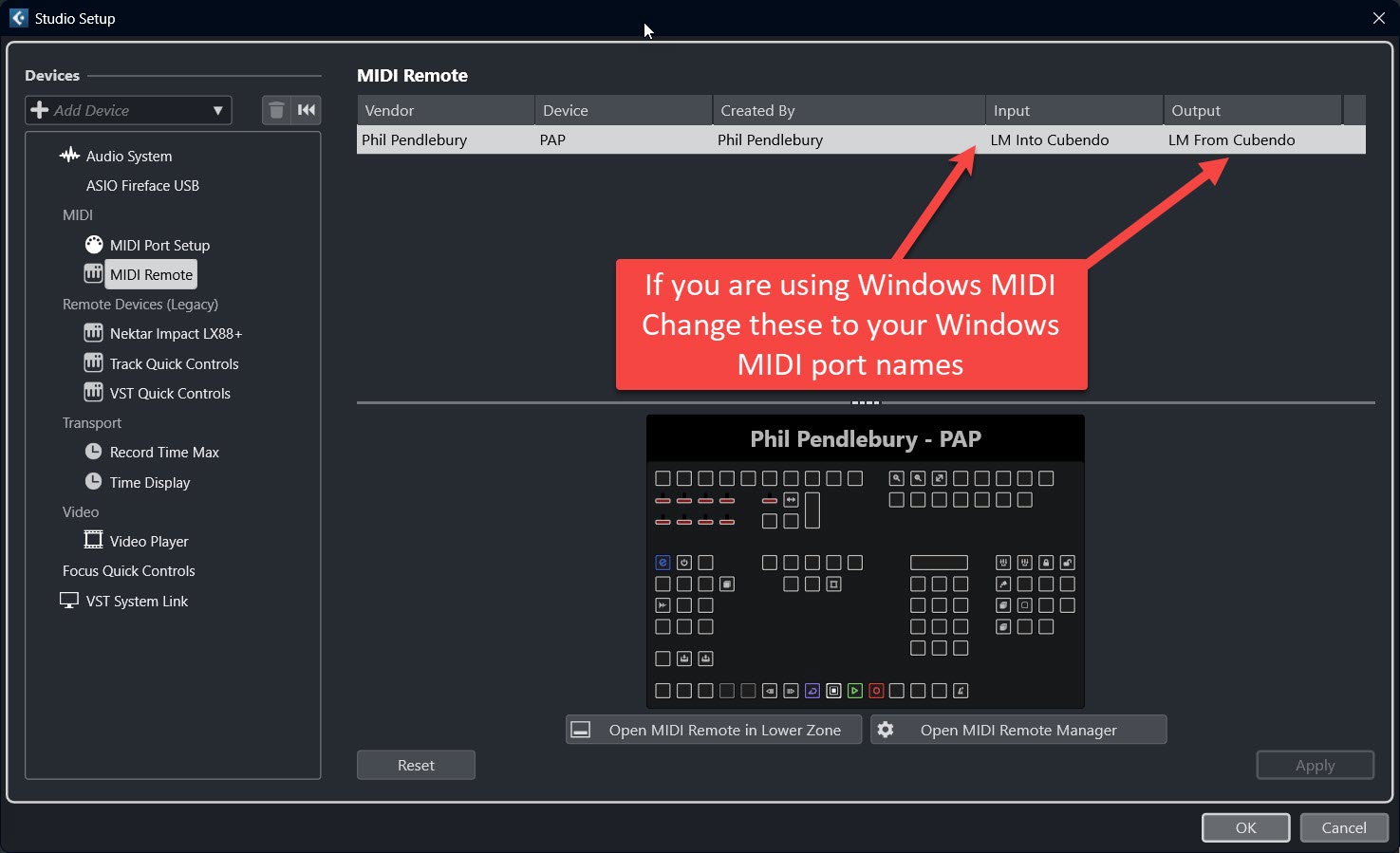
Open Cubase/Nuendo Studio Setup.
Go to MIDI Remote and load the script "Phil Pendlebury PAP". Ensure the Input and Output ports match those you created in Windows MIDI or loopMIDI.
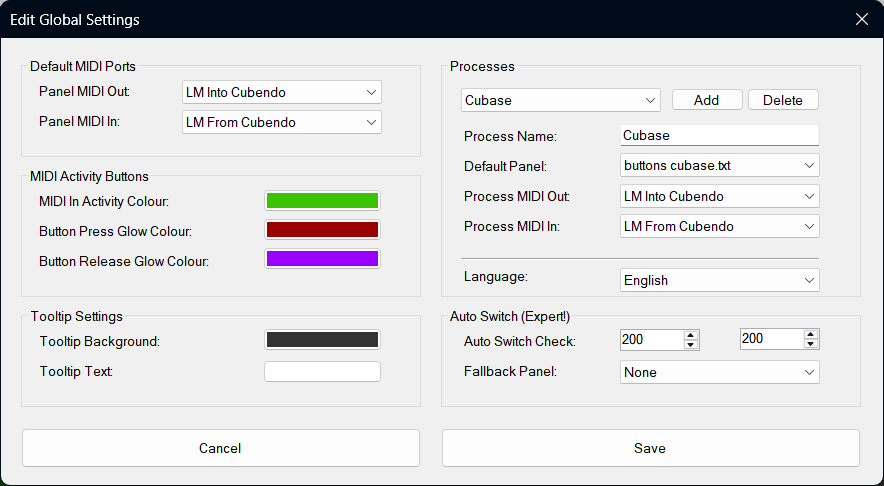
Launch the panel. Open Edit Global Settings to configure your ports and language.
Enable Auto Switch if you want the panel to detect which application (Cubase, Wavelab, etc.) is active and switch button layouts automatically.
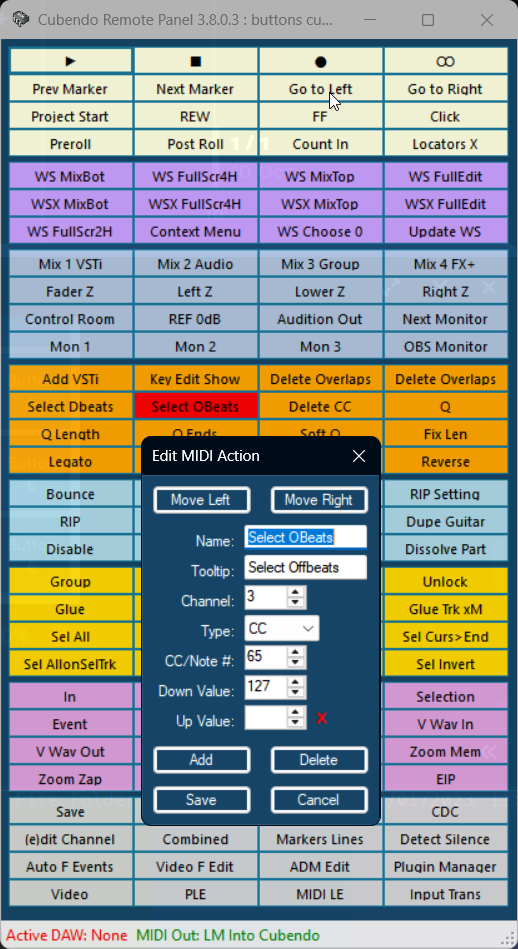
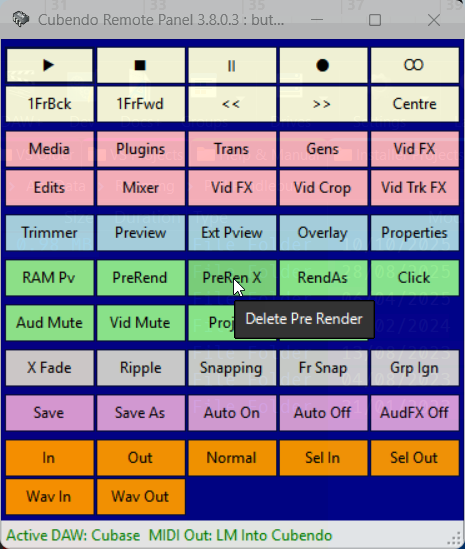
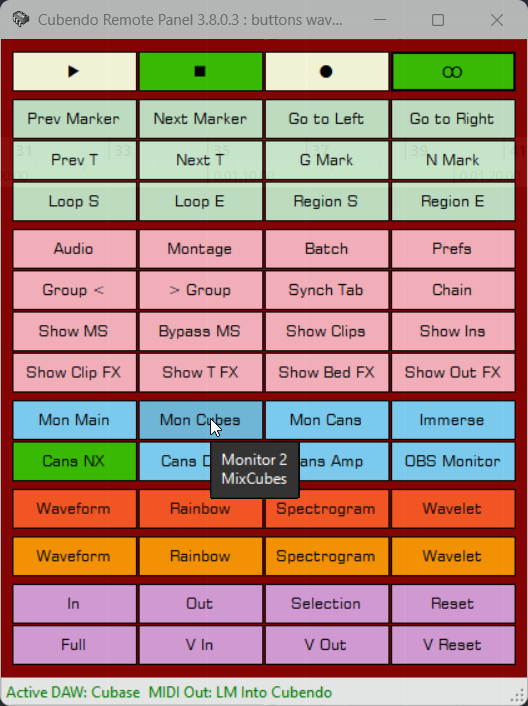
The panel can be customised for any application. Here are examples of different layouts in action.
Complex layouts with coloured sections for transport, editing, and macros.
Optimised for video workflows with render and preview toggles.
Streamlined for mastering tasks, markers, and analysis tools.
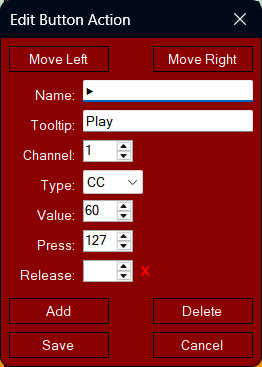
Right click any button to modify its behaviour.
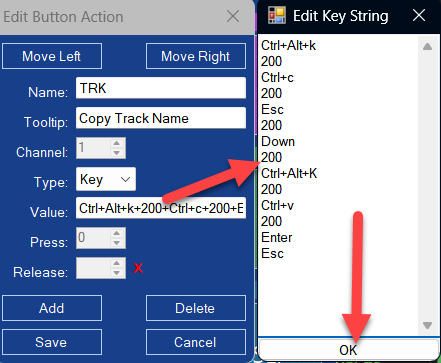
Create complex macros with delays.
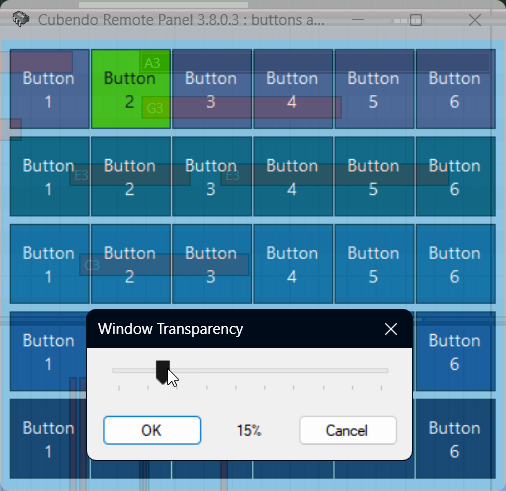
Full control over transparency, fonts, and dimensions.
Use these aliases in the "Value" field when Type is set to KEY.
| Function | Alias |
|---|---|
| Modifiers | ctrl, alt, shift, win |
| Navigation | enter, esc, tab, backspace |
| Arrows | up, down, left, right |
| Function | Alias |
|---|---|
| Numpad | numpad0 ... numpad9 |
| Numpad Misc | numpadenter, numpaddiv, numpadmult |
| Logic | 2000 (Delay ms), [Repeat=x] |
The application runs in the Windows System Tray. Right click the icon for these options:
Button layouts are stored in .txt files. You can edit them manually.
To create coloured sections in your panel, use the specific ID format:
#1, Transport Controls, LightYellow
// Buttons go here...
#2, Macros, #002790
// More buttons...
Each line represents a button with fields separated by commas:
Name, Tooltip, Channel, Type, Value, Press, Release
Example: Play, Start Playback, 1, CC, 60, 127, 0